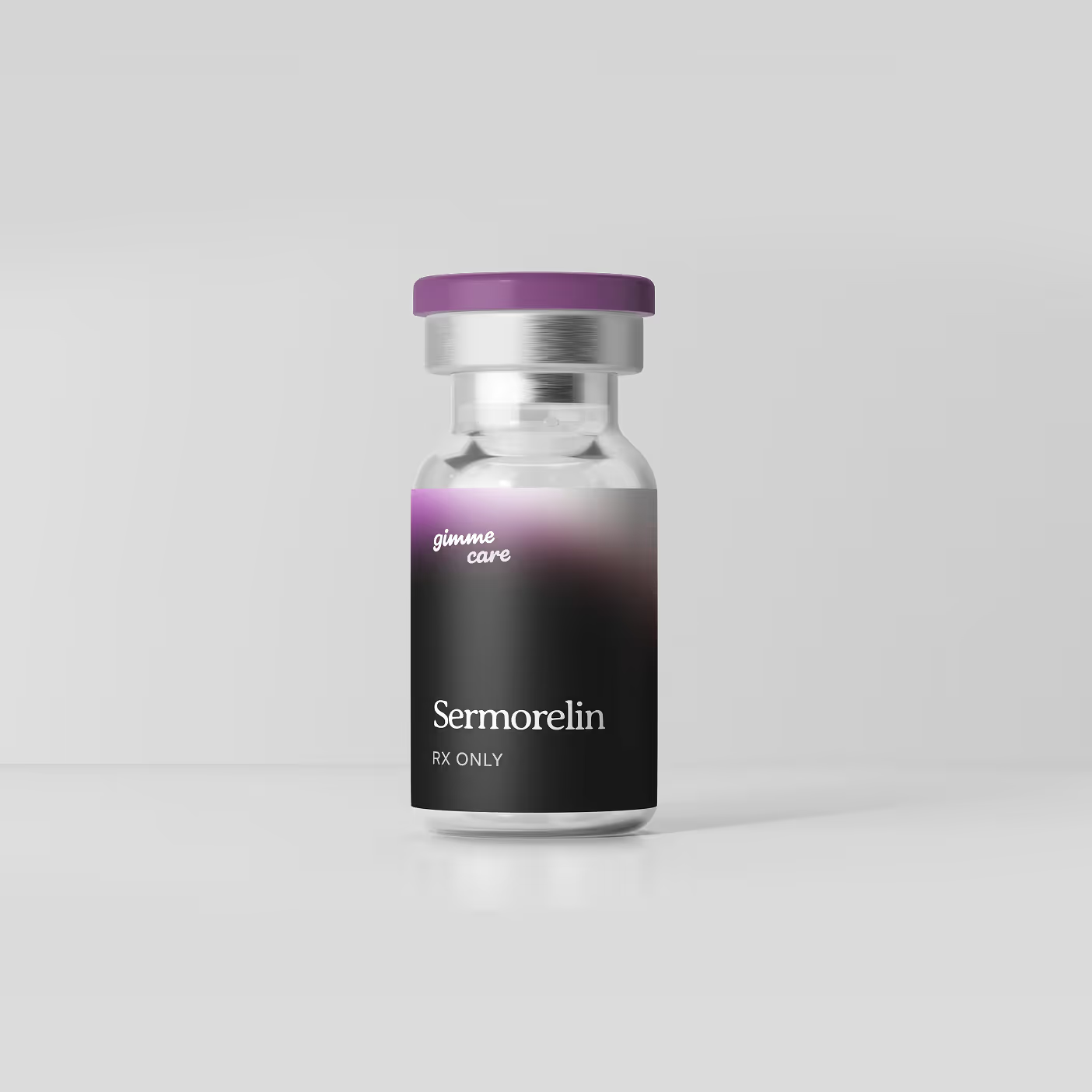

- Sermorelin is a peptide, and peptides present specific challenges when taken orally. Absorption and bioavailability differ significantly by delivery route.
- Injections are the most studied and clinically established form of Sermorelin delivery. Other formats, including oral and sublingual options, involve results that are less predictable.
- ‘Sermorelin pills’ is not a single, standardized product category. Patients may encounter oral tablets, troches, or sublingual preparations, each with different properties.
What is the most effective way to take Sermorelin? The answer depends largely on how the medication is delivered and absorbed in your body.
Route of administration plays a major role in how much of the peptide reaches circulation, how consistent dosing is, and what tradeoffs you are making.
This article explains the key differences between delivery methods and highlights the questions to discuss with a licensed clinician before starting Sermorelin therapy.
Sermorelin Pills vs Injections at a Glance
Sermorelin injections are generally more effective because they provide reliable absorption and consistent dosing, while pills offer greater convenience but less predictable results.
The difference between Sermorelin oral vs injection is convenience, absorption and dosing consistency. Oral or sublingual forms are easier to take but may have lower bioavailability, while injections bypass digestion and deliver more consistent effects.
The right option depends on clinical context, the specific formulation, and guidance from your clinician when using Sermorelin.
What Is Sermorelin?
Sermorelin is a synthetic version of the growth hormone-releasing hormone (GHRH), a naturally occurring hormone produced by your body.
It works by stimulating the pituitary gland to produce and release growth hormone. Rather than introducing growth hormones directly, Sermorelin supports the body's own production process.
Doctors may discuss Sermorelin for low growth hormone levels, age-related changes, or general wellness goals. Because it works with your body’s natural system, It’s often considered a more balanced approach than taking growth hormone directly.
Is There a True Sermorelin Pill?
There is no true FDA-approved Sermorelin pill, and products labeled as ‘pills’ may actually be different formulations with varying absorption.
With Sermorelin, the term ‘pill’ is often used loosely. Some compounded options include oral tablets, sublingual tablets, or troches that dissolve in the mouth. These formats differ in how they are absorbed, with sublingual forms designed to bypass part of the digestive system, while standard oral tablets are more likely to be broken down before entering circulation.
This distinction between a Sermorelin pill vs injection matters because it affects how effective the treatment may be. Injectable Sermorelin has more predictable absorption, while non-injectable forms can vary.
How Do Injections, Oral Forms, and Sublingual Forms Differ?
Injection Delivery
Subcutaneous injections deliver Sermorelin directly beneath the skin, where it’s then absorbed into the bloodstream. This bypasses the digestive system entirely.
Absorption is relatively rapid and direct. Sermorelin is administered by subcutaneous injection, typically in the stomach area, and has established clinical use in this form.
Self-administered subcutaneous injections are common in outpatient settings. With proper instruction, most patients are able to administer them at home.
Oral or Pill Delivery
True oral delivery, meaning a capsule or tablet that is swallowed, exposes the peptide to the full gastrointestinal environment. Enzymes in the gut, including proteases, are designed to break down proteins and peptides.
Research in peptide pharmacology has consistently identified oral bioavailability as a limiting factor for peptide-based drugs.
Sublingual or Troche Delivery
Sublingual Sermorelin, delivered as a tablet or troche that dissolves under the tongue or against the cheek, is designed to absorb through the oral mucosa rather than through the gastrointestinal tract.
This approach avoids some of the degradation associated with swallowed oral delivery, but the degree of absorption varies. Peptide absorption through mucous membranes depends on the specific formulation, the molecule's size and structure, and how well the preparation maintains stability in the oral environment.
Why Route of Administration Affects Absorption and Bioavailability
The route of administration affects absorption because peptides are broken down in the digestive system, reducing how much active drug reaches the bloodstream.
Bioavailability refers to how much of a substance enters circulation and can have an effect. With peptides like Sermorelin, oral delivery exposes them to stomach acid and digestive enzymes that break them into amino acids before they can be absorbed.
Injectable delivery bypasses this process, allowing more of the intact peptide to reach circulation with less degradation.
Key Differences Between Sermorelin Pills and Injections
Absorption and Bioavailability
Dosing Consistency and Predictability
Consistent dosing matters in hormone-related therapies because the goal is usually to produce a predictable physiological response over time.
Injections have an established track record in clinical use, with dosing protocols developed over years of use in both deficiency treatment and compounded wellness applications.
Oral and sublingual forms are harder to standardize. Absorption can be affected by what you've eaten, individual differences in digestive chemistry, saliva production, and mucosal health.
Convenience and Ease of Use
Subcutaneous injections with a small-gauge needle are generally described as minimally painful, and many patients become comfortable with the process quickly.
Sermorelin oral or sublingual formats remove the injection step but introduce questions about whether the trade in absorption is worth it for your goals.
Safety Considerations
Injectable Sermorelin has a documented safety profile from its clinical use. Common side effects associated with injection include injection-site reactions, flushing, headache, and dizziness.
For oral and sublingual compounded forms, the safety data is thinner. Because these products are compounded and not FDA-approved, they have not undergone the same clinical testing processes as approved medications.
Storage, Handling, and Administration
Injectable Sermorelin typically requires refrigeration and is administered using a syringe. This adds logistical requirements but is manageable for most patients following proper instructions.
Oral or sublingual formats may have different storage requirements depending on the compounding pharmacy and specific formulation. Always confirm storage and handling guidance directly with your prescribing clinician or dispensing pharmacy.
Potential Benefits People Ask About
Why Some People Prefer Injections
For patients who are comfortable with self-injection, the injectable route offers a more established and clinically predictable delivery method.
Providers can monitor response with greater confidence because the effects of subcutaneous Sermorelin are better understood than for non-injectable alternatives. For people prioritizing consistent, evidence-informed treatment, this predictability is meaningful.
Why Some People Ask About Pill or Sublingual Options
Some people have anxiety surrounding injections, and others simply prefer a format that fits more easily into a daily routine.
Sublingual formats also sometimes appeal to people who have heard that mucosal absorption can be efficient for certain compounds, such as certain hormones that do have validated sublingual delivery systems.
Why "Better" Depends on the Priority
If the priority is dosing consistency and a more established clinical evidence base, injections have the stronger profile.
If the priority is avoiding needles, an oral or sublingual format may be explored with a provider, with a clear-eyed understanding of the tradeoffs in absorption and available evidence.
Side Effects and Safety Considerations
Sermorelin side effects are usually mild but vary by delivery method, with injections more commonly causing localized reactions and systemic symptoms.
Sermorelin therapy should always be supervised by a licensed clinician, as safety and tolerability can differ between injectable and non-injectable forms. Compounded formulations may also introduce variability in how the medication is absorbed and tolerated.
Injection-Site Reactions and Tolerability
The most common side effects associated with injectable Sermorelin include:
- Redness, swelling, or irritation at the injection site
- Headache
- Flushing
- Dizziness
- Nausea (in some patients)
- Sleepiness, particularly with evening dosing
Oral or Sublingual Considerations
Oral forms carry the degradation concern. Beyond absorption unpredictability, gastrointestinal discomfort is possible, though clinical data on compounded oral Sermorelin is limited.
For sublingual formats, localized mucosal irritation is a possibility depending on the formulation's ingredients and the frequency of use. Long-term tolerability data for compounded sublingual Sermorelin is not well-established.
Why Formulation Claims Should Be Reviewed Carefully
Not all compounded preparations are equivalent. The quality, stability, and bioavailability of a compounded product can vary between pharmacies.
When evaluating any compounded Sermorelin product, including pills, troches, or sublingual tablets, it's worth asking about the pharmacy's quality standards and what testing the formulation undergoes.
Why Clinician Supervision Matters
Sermorelin works through the brain signals that control hormone release, so regular check-ins, lab tests, and dose adjustments are important to make sure it’s working safely and effectively.
Self-purchasing Sermorelin pills online, without a prescription and clinical oversight, bypasses the evaluation and monitoring that makes treatment both safe and effective.
Which Route May Fit Which Priority?
The best delivery method depends on whether your priority is consistent results, convenience, or clarity about what you’re being prescribed.
If the Top Priority Is Dosing Consistency
Injectable Sermorelin has a more established evidence base and a more predictable absorption profile. If you and your provider are focused on achieving a reliable physiological response and being able to monitor it meaningfully, injection is generally the format with stronger support.
If the Top Priority Is Convenience or Avoiding Needles
Non-injectable options like sublingual or oral forms may be worth discussing with your provider. These can be easier to use, but absorption is less predictable and results may vary depending on the formulation.
If You're Unsure What Formulation Is Actually Being Offered
It’s important to understand exactly what form you are getting. Terms like ‘pill’, ‘tablet’, ‘troche’, and ‘sublingual’ are sometimes used interchangeably, even though they work differently. Knowing how the product is absorbed helps set realistic expectations for effectiveness and outcomes.
Questions to Ask a Licensed Clinician
Before starting Sermorelin in any form, consider raising these questions directly with your provider:
- What form of Sermorelin is actually being prescribed? Is it a subcutaneous injection, a sublingual tablet, a troche, or an oral capsule? Each has a different profile.
- How is it taken, stored, and monitored? Practical logistics matter for adherence, and your provider should be able to give you clear instructions.
- What should I expect regarding absorption and consistency? Ask specifically how the formulation behaves in the body and how your provider will evaluate whether it's working.
- What side effects or limitations should I know about? Ask what to watch for and what would prompt a follow-up or dosing adjustment.
- Is there evidence for this delivery route? Your provider should be able to speak to the evidence base, or honestly acknowledge where it's limited.
Bottom Line
Sermorelin pills vs injections is not a simple answer. The delivery route affects how much active compound reaches circulation, how predictable the dosing is, and how well the treatment can be clinically monitored.
Injections are the more established format, with a better-documented absorption profile. Non-injectable options, including sublingual and oral forms, exist in the compounded space but carry more uncertainty around bioavailability and consistency.
Neither format is right for everyone, and neither is appropriate without a clinical evaluation. Treatment decisions should be individualized, based on your health history, treatment goals, and what a licensed provider determines is medically appropriate.
If you'd like to explore Sermorelin as part of a clinician-guided care program, a licensed provider can help you understand which options are available and what to expect. You can also learn more about Sermorelin treatment and what a supervised evaluation involves.
Start your weight loss journey today